
Uterine fibroids are among the most common gynecologic conditions affecting people with a uterus—and one of the more frequently overlooked causes of fertility challenges. As reproductive endocrinologists and minimally invasive gynecologic (MIG) surgeons here at Fertility Centers of Illinois, we see firsthand how fibroids affect fertility, how often the connection goes unrecognized, and how much is possible once we have a complete picture. Here’s what you need to know.
“One of the most common things I hear from patients is that they wish someone had connected the dots sooner, shares Edward Nguyen, M.D., Ph.D., fertility specialist and MIGs surgeon at FCI. “Fibroids are so common, and their connection to fertility is so underrecognized. The evaluation is not complex. What changes when you have answers is significant.”
What are uterine fibroids?
Uterine fibroids—clinically known as leiomyomas—are noncancerous growths of smooth muscle that develop in or on the uterus. They can range from tiny and undetectable to large enough to change the shape of the uterine cavity.
Uterine fibroids are extremely common. By age 50, more than 70 percent of people with a uterus will develop them. Black women are disproportionately affected—an estimated 8 in 10 Black women will develop fibroids, often at earlier ages and with more severe symptoms. That disparity matters, and addressing it starts with early evaluation and access to real answers.
How do fibroids cause infertility?
There are three main types of uterine fibroids, and location determines how much they affect fertility:
- Submucosal fibroids develop inside the uterine cavity, just beneath the lining. These have the greatest impact on fertility—they limit the space for embryo implantation and can cause early pregnancy loss. Removal is almost always recommended before attempting conception.
- Intramural fibroids grow within the muscular wall of the uterus. Smaller ones that don’t distort the cavity may not require treatment, but larger ones can affect how the uterus functions and reduce implantation rates.
- Subserosal fibroids grow on the outside of the uterus. They’re less likely to directly affect implantation—but they can cause significant symptoms, including pelvic pain, pressure, and heavy bleeding.
Some people with fibroids have no symptoms at all. Others experience heavy or prolonged periods, pelvic pain or pressure, frequent urination, or difficulty conceiving. If any of these sound familiar, an evaluation is worth scheduling.
The RE + MIG Surgeon Advantage at FCI
What makes fibroids treatment at FCI different is that reproductive endocrinologists and MIG surgeons work together as part of the same team. That matters for patients who need both fertility treatment and surgical intervention—your care plan is coordinated, not handed off between providers who don’t know each other’s thinking.
Our MIGs surgeon, Edward Nguyen, M.D., Ph.D., can perform hysteroscopy and laparoscopic myomectomy in-office and at affiliated surgical centers. Hysteroscopic myomectomy—removal of submucosal fibroids through the cervix—is one of the most effective and least invasive procedures available, and our team has deep experience with it.
What does insurance cover for fibroids treatment in Illinois?
Illinois has one of the strongest fertility insurance mandates in the country. As of January 1, 2026, all group health plans that include pregnancy benefits must cover infertility diagnosis and treatment—and that can include evaluation and fibroids treatment when they are contributing to fertility challenges. The mandate applies regardless of employer size, and it explicitly includes LGBTQIA+ individuals and single parents.
A Financial Educator on our team can review your specific plan before you begin and help you understand exactly what’s covered. That conversation is part of care—not an add-on.
Fibroids treatment options at FCI
- Hysteroscopic myomectomy—removal of submucosal fibroids through the cervix using a hysteroscope, with no external incisions. Strong evidence for improved implantation rates.
- Laparoscopic myomectomy—minimally invasive removal of intramural or subserosal fibroids using small incisions. Shorter recovery, uterus intact.
- Abdominal myomectomy—for more extensive fibroid burdens requiring open surgery. Fertility preserved.
- IVF—for some patients, in vitro fertilization is the most direct path to pregnancy, either after myomectomy or as a standalone approach.
Whether you’re experiencing symptoms or in the middle of fertility treatment and wondering if fibroids are part of the picture—our team is here.
Frequently asked questions : Uterine fibroids
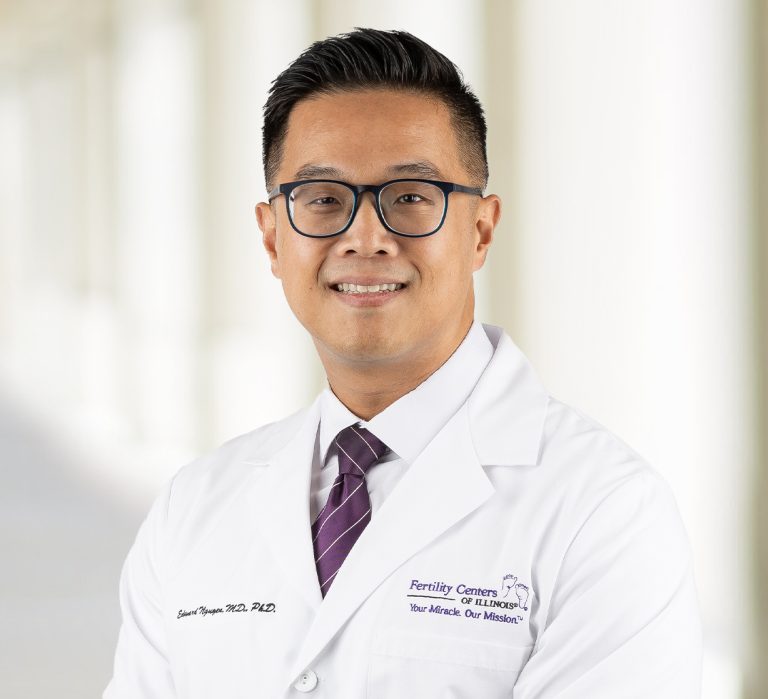
Medical contribution by Edward Nguyen, M.D., Ph.D.
Edward Nguyen, M.D., Ph.D., is dedicated to helping patients fulfill their dreams of parenthood. As both a minimally invasive gynecologic surgeon (MIGS) and reproductive endocrinologist, he brings a unique expertise to best support his patients throughout their family-building journey. At Fertility Centers of Illinois, Dr. Nguyen focuses on enhancing surgical outcomes by using minimally invasive techniques that reduce or eliminate incisions, leading to improved patient recovery and overall experience.