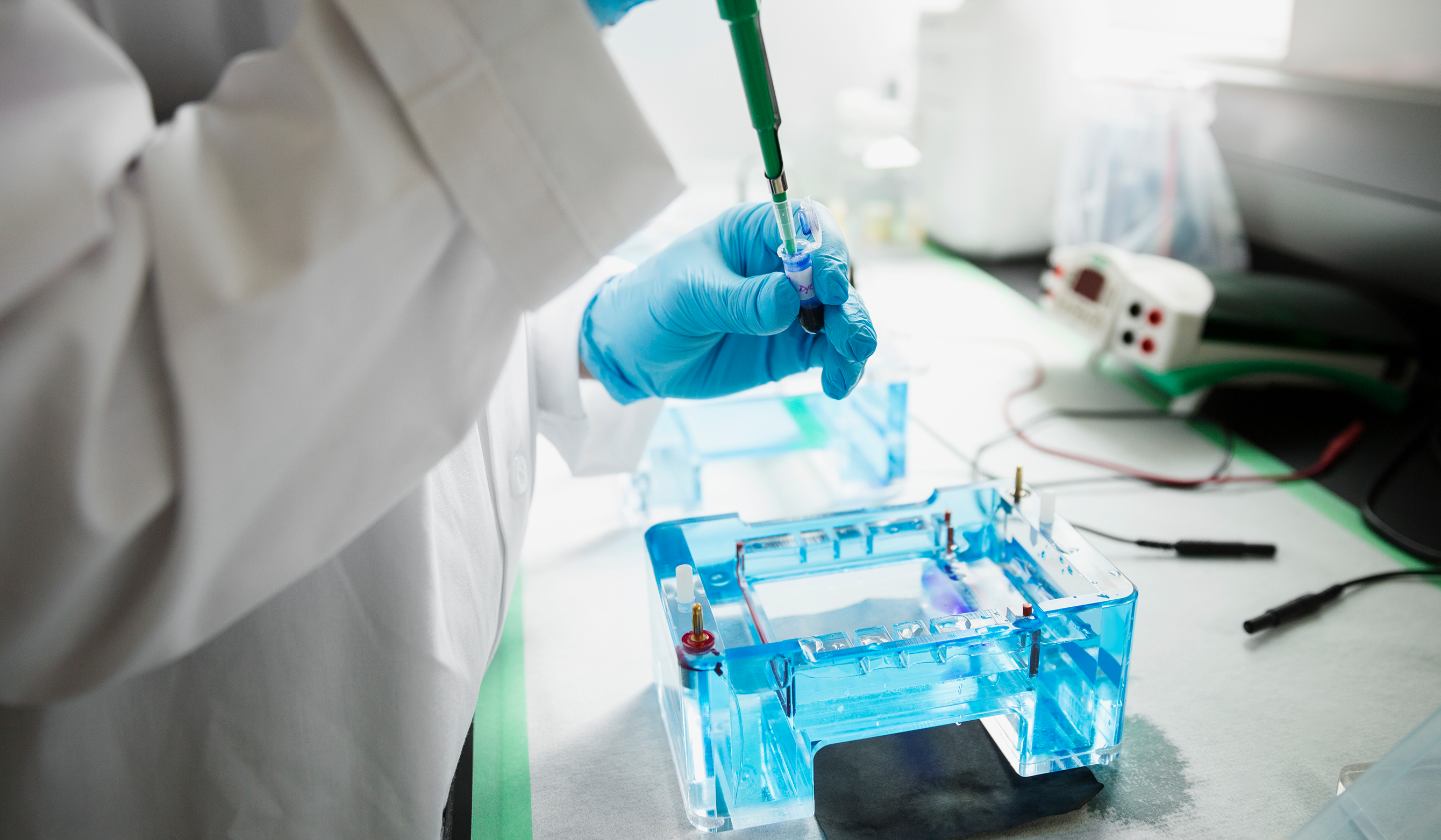

Your eggs, sperm, and embryos spend some of the most important hours of in vitro fertilization (IVF) in the lab, and you’ll rarely see it. Here’s what happens behind the scenes at Fertility Centers of Illinois (FCI), where we’ve been helping families grow for over 40 years.
Our IVF labs at the Chicago/River North and Highland Park IVF Centers serve patients from every FCI location.
1. Three Specialized Labs, One Standard of Care
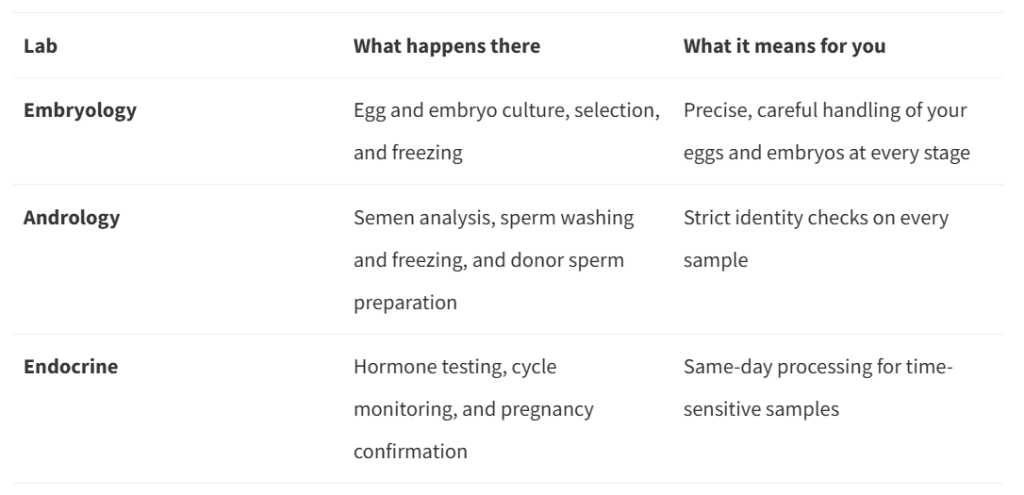
A full-service fertility practice relies on more than one lab. We run three specialized labs, and all three operate under some of the most rigorous, verified protocols in the field.
2. Triple-Verified Identity Checks at Every Stage
A strong lab verifies the identity of every specimen at every step. Every specimen in our care follows a chain-of-custody protocol built on both human and electronic verification, and each one is triple-verified at every stage.
You’re part of the process too. We’ll ask you to confirm your identity out loud at key points throughout treatment.
3. Carefully Controlled Air Quality
Embryo development is sensitive to its surroundings, and research has linked poor air quality in IVF labs with lower fertilization and embryo development rates.
Our IVF labs use HEPA filtration that controls both airborne particles and gases known as volatile organic compounds (VOCs). Humidity is held at precise levels throughout the lab, too.
4. Leadership in Egg and Embryo Freezing
Vitrification is an ultra-fast freezing technique that prevents ice crystals from forming, which helps eggs and embryos survive thawing. It’s what makes egg freezing and frozen embryo transfer possible at the level patients rely on today.
FCI’s lab team has been a pioneer in vitrification, and our work has helped advance how eggs and embryos are frozen and stored at fertility clinics around the world.
Our IVF labs are led by Juergen Liebermann, Ph.D., HCLD, Director of Laboratories.
5. Accreditation and Public Outcome Reporting
Ask whether a lab is accredited and whether the practice reports its results. Our labs are accredited by the College of American Pathologists (CAP), whose laboratory accreditation program is recognized nationwide.
Our embryology labs also meet the stringent criteria required for membership in the Society for Assisted Reproductive Technology (SART), the organization that sets standards for assisted reproductive technology (ART) care in the U.S. We report birth outcome data to SART every year, so our results are available for anyone to review.
6. Embryologists With Years of Training
Embryology is highly specialized work. Our embryologists complete a 4- to 5-year training pathway of mentorship and supervised practice before they perform procedures on their own, and their competency is verified every year.
7. Research That Moves Fertility Care Forward
Practices that contribute to research tend to stay close to the latest evidence. Every year, our physicians and scientists contribute research to the American Society for Reproductive Medicine (ASRM) annual meeting and publish in leading journals, including Fertility and Sterility and Human Reproduction.
Questions About IVF Labs
See the Labs Behind Your Care
Want to learn more about our labs or talk with a fertility specialist? Illinois law requires many insurance plans to cover fertility treatment, and our team can help you understand your benefits before you start.