

Building a family is one of the most personal decisions you’ll make—and at Fertility Centers of Illinois (FCI), we believe every person who wants to become a parent deserves expert, inclusive care to do it. For over 40 years, we’ve been proud members of the Chicago community, helping LGBTQIA+ individuals and couples build their families alongside every other family we serve. Here’s what you need to know about LGBTQIA+ family building options, Illinois insurance coverage, and what to expect when you come in.
“Your miracle is our mission—and that’s true for every family we serve,” shares Jennifer Hirshfeld-Cytron, M.D. “LGBTQIA+ patients come to us with every kind of plan and every kind of question, and we welcome all of it. There’s no wrong place to start the conversation.”
What Illinois Law Means for LGBTQIA+ Patients
If you have health insurance in Illinois, you may have more fertility coverage than you realize.
Illinois has one of the strongest fertility insurance mandates in the country. As of January 1, 2026, all group health insurance plans that include pregnancy benefits must cover infertility diagnosis and treatment—regardless of employer size. And critically, Illinois law includes LGBTQIA+ individuals and single parents in that coverage. The law defines infertility to include a person’s inability to reproduce either as a single individual or with a partner without medical intervention—meaning coverage cannot be denied because you don’t meet a traditional clinical definition of infertility.
What’s covered under qualifying plans in Illinois:
- IVF, IUI, embryo transfer, artificial insemination, and preimplantation genetic testing (PGT)
- Up to four egg retrievals per patient, with up to two additional after a live birth—a lifetime maximum of six
- Medically necessary fertility preservation
A few important exceptions: self-funded ERISA employer plans are not bound by the Illinois mandate, nor are religious organizations or out-of-state policies. Our team can help you determine exactly what your plan covers before you spend anything out of pocket.
What Treatment Options Are Available for LGBTQIA+ Patients?
LGBTQIA+ patients at FCI have access to the full range of fertility treatments—tailored to your goals, your biology, and your family structure. Options include:
- Intrauterine insemination (IUI) with donor sperm—typically the first option for those planning to carry using donor sperm, and often covered under the Illinois mandate.
- In vitro fertilization (IVF)—for more complex situations or when IUI isn’t the right fit. Includes options for genetic testing and frozen embryo transfer.
- Reciprocal IVF (co-IVF)—one partner provides the eggs; the other carries the pregnancy. A meaningful way for both partners to be biologically part of the process.
- Donor egg and donor embryo—for those who need eggs or embryos from a third-party donor.
- Working with a gestational carrier—for those who are unable to carry a pregnancy. Our team guides you through agency selection, legal coordination, and the full process.
- Intended father treatment (dual insemination)—sperm from both partners can be used to create embryos for transfer to a gestational carrier.
- Fertility preservation for transgender individuals—egg freezing or sperm banking before gender-affirming hormone therapy or surgery.
What Is Reciprocal IVF?
Reciprocal IVF—sometimes called co-IVF—is a fertility treatment where one partner provides eggs and the other carries the pregnancy. The egg provider goes through an IVF stimulation cycle; the eggs are fertilized with donor sperm to create embryos; one embryo is transferred to the carrying partner’s uterus. Both partners are biologically connected to the pregnancy—one genetically, one as the person who carries and gives birth.
What Will My Treatment Plan Look Like?
Your plan starts with a consultation with one of our reproductive endocrinologists. Your physician will review your medical history, understand your family-building goals, and recommend a personalized diagnostic and treatment plan.
A few things worth thinking about before that first appointment:
- If you’re planning to carry: Who will provide the eggs—you, your partner, or a donor? Will you use an anonymous sperm donor or a known donor?
- If you’re planning to work with a gestational carrier: Do you have someone in mind, or will you work with an agency? Who will provide the eggs and sperm?
- If you’re pursuing treatment as a solo parent: What donor options—sperm, egg, or embryo—best fit your situation?
Affording Treatment: What to Know
Our financial team will review your insurance benefits at no cost to you before you begin—and in Illinois, the mandate means many LGBTQIA+ patients have more coverage than they expect. We’ll help you understand exactly what your plan covers, identify any gaps, and explore financing options where needed.
Fertility Equity™ care—what it means for you
Our care teams are Fertility Equity™ certified, which means our team is trained to provide culturally competent, inclusive care for all communities—including those who have historically faced barriers to reproductive healthcare. That shows up in how we communicate, how we build treatment plans, and how we show up for every patient who walks through our doors.
What Legal Considerations Should LGBTQIA+ Families Know About?
Family-building law varies by treatment type, and we recommend connecting with a reproductive attorney early—especially for gestational carrier arrangements and donor conception. Our team can provide referrals to attorneys who specialize in LGBTQIA+ family building.
For reciprocal IVF, parental rights may require a second-parent adoption depending on your state. For gestational carrier arrangements, a legal contract protecting all parties needs to be in place before any embryo transfer. Your attorney will guide you through the specifics.
Frequently Asked Questions
Whether you’re just beginning to explore your options or ready to schedule your first consultation, our team is here. Have questions about LGBTQIA+ family building or your Illinois insurance coverage? Schedule a consultation with Fertility Centers of Illinois today.
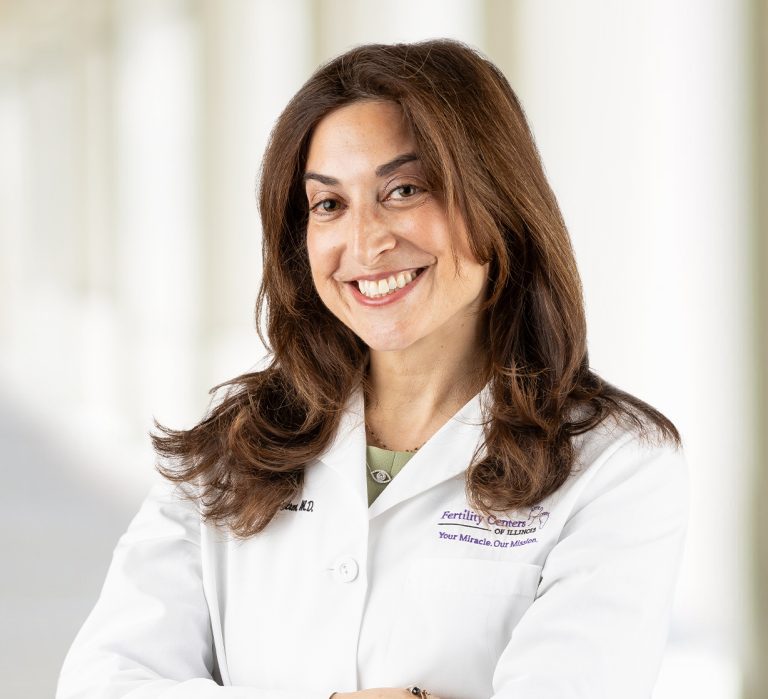
Medical contribution by Jennifer Hirshfeld-Cytron, M.D.
Dr. Hirshfeld-Cytron is board certified in both Obstetrics and Gynecology and Reproductive Endocrinology and Infertility and has been practicing medicine since 2004. She completed her Obstetrics and Gynecology residency at the University of Chicago, and then completed her three-year fellowship in Reproductive Endocrinology and Infertility at Northwestern.